
BPC 157 and TB 500 & KPV “Coremend” Blend
$229.00
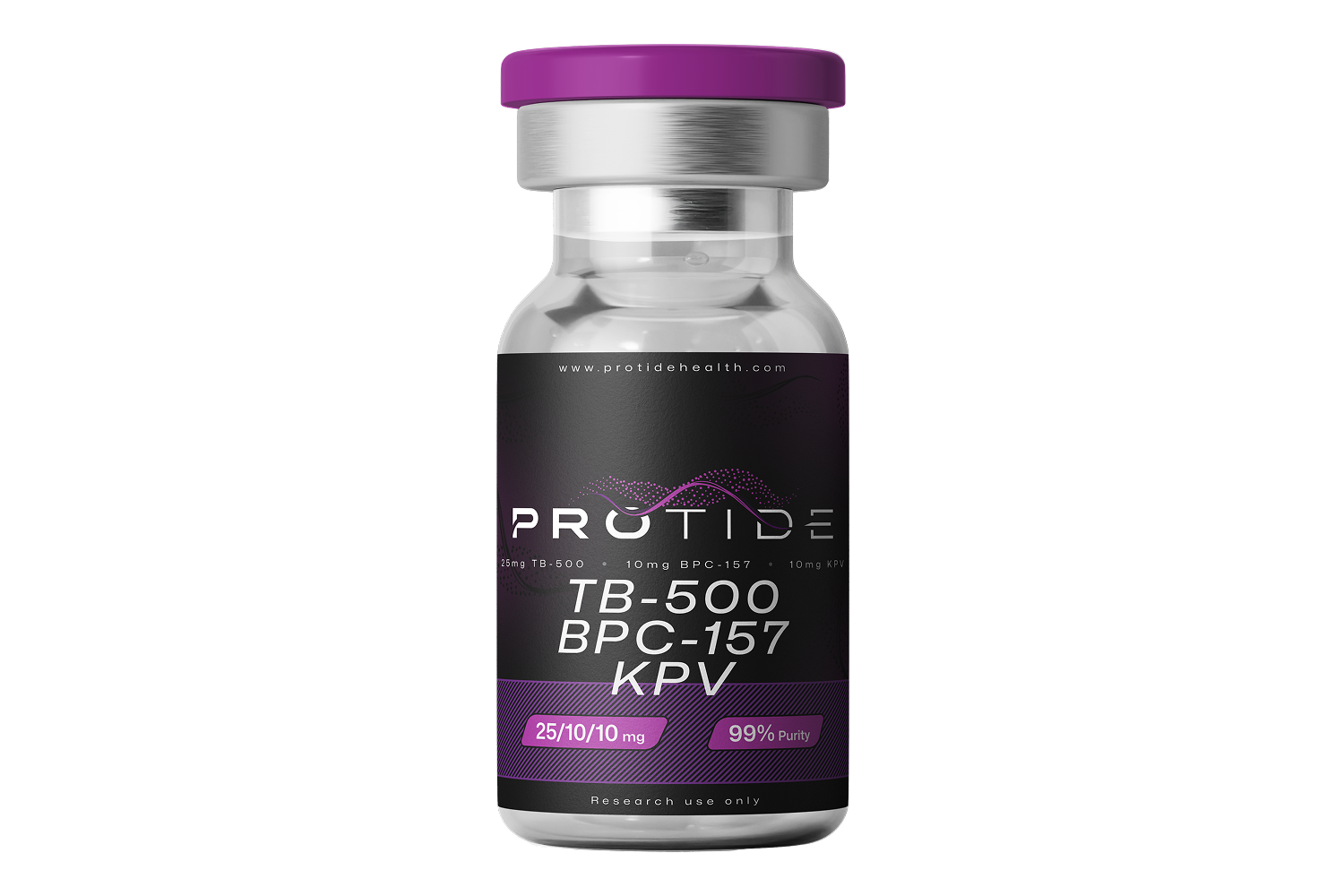
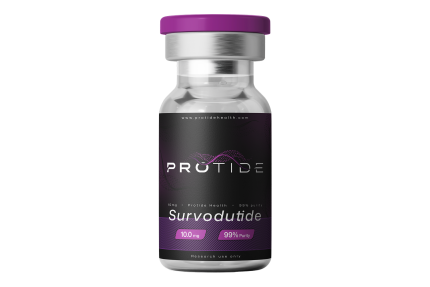
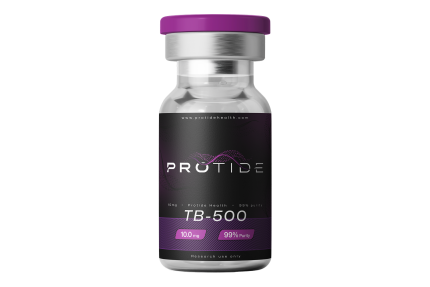
BPC 157 and TB 500 with KPV product shot featuring a professionally labeled Protide Health 3mL research vial containing white to off-white lyophilized powder, with the 25mg thymosin beta-4/TB-500, 10mg BPC-157, and 10mg KPV composition clearly displayed against a clean laboratory-style background with research-use-only labeling.


BPC 157 and TB 500 with KPV 45mg – Protide Health USA
BPC 157 and TB 500 Blend Overview & Technical Specifications
The Protide Health BPC 157 and TB 500 formulation combines three distinct peptide components:
- Thymosin Beta-4 / TB-500: 25mg
- BPC-157: 10mg
- KPV: 10mg
The total peptide content is 45mg.
The thymosin beta-4 component in this formulation is chemically represented by the full 43-residue N-acetylated sequence:
Ac-Ser-Asp-Lys-Pro-Asp-Met-Ala-Glu-Ile-Glu-Lys-Phe-Asp-Lys-Ser-Lys-Leu-Lys-Lys-Thr-Glu-Thr-Gln-Glu-Lys-Asn-Pro-Leu-Pro-Ser-Lys-Glu-Thr-Ile-Glu-Gln-Glu-Lys-Gln-Ala-Gly-Glu-Ser
The supplied thymosin beta-4 chemical record identifies this material with CAS 77591-33-4 and molecular formula C212H350N56O78S.
BPC-157 is a synthetic pentadecapeptide containing the sequence:
Gly-Glu-Pro-Pro-Pro-Gly-Lys-Pro-Ala-Asp-Asp-Ala-Gly-Leu-Val
Its identity can be reviewed in the supplied BPC-157 chemical record.
KPV is the tripeptide:
Lys-Pro-Val
It corresponds to the C-terminal three residues of alpha-melanocyte-stimulating hormone and is independently cataloged in the supplied KPV chemical record.
The BPC 157 and TB 500 blend with KPV is supplied strictly for controlled laboratory research.
Technical Specifications
Blend
- Product Name: Coremend Blend
- Total Quantity: 45mg
- Thymosin Beta-4 / TB-500: 25mg
- BPC-157: 10mg
- KPV: 10mg
- Form: Lyophilized powder
- Vial Size: 3mL
- Purity: 99%
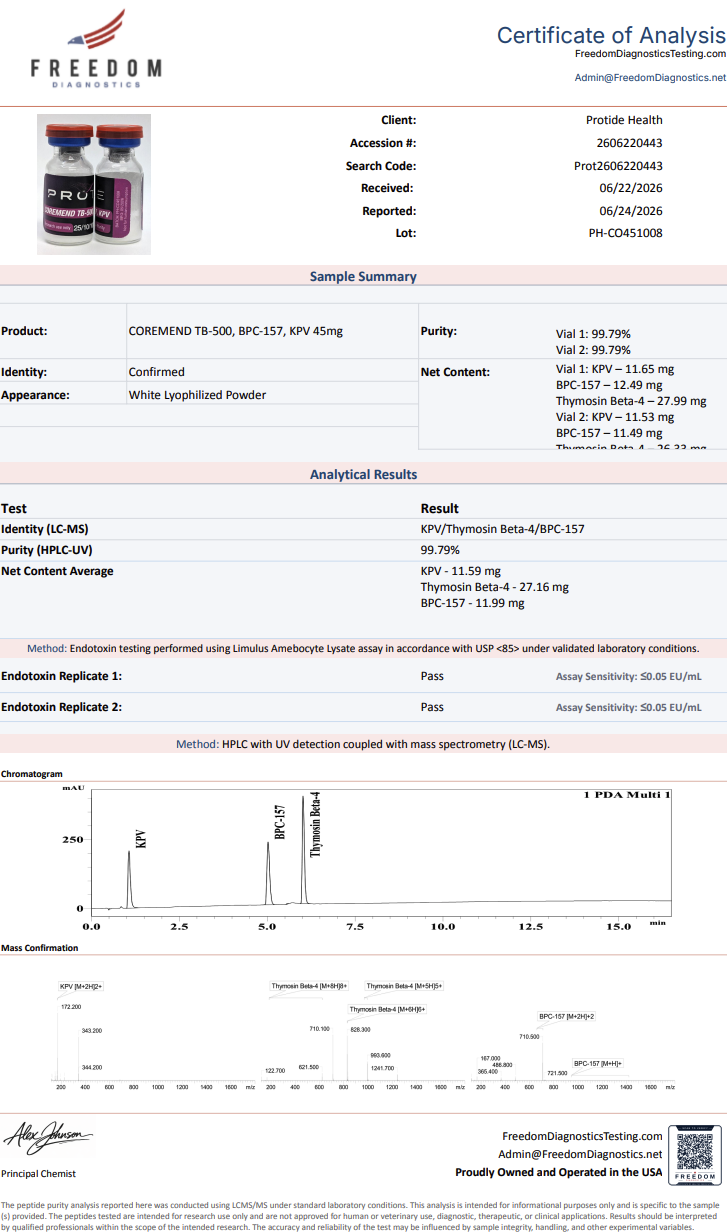
- Testing: HPLC-MS verified; third-party tested
- Appearance: White to off-white lyophilized powder
- Solubility: Soluble in water
- Storage: Store sealed at ≤6°C and protected from heat, light, and moisture
Thymosin Beta-4 Component
- Peptide Length: 43 amino acids
- CAS Number: 77591-33-4
- PubChem CID: 16132341
- Molecular Formula: C212H350N56O78S
- Molecular Weight: Approximately 4963.6 g/mol
BPC-157 Component
- Peptide Length: 15 amino acids
- CAS Number: 137525-51-0
- PubChem CID: 9941957
- Molecular Formula: C62H98N16O22
- Molecular Weight: Approximately 1419.5 g/mol
- Sequence: GEPPPGKPADDAGLV
KPV Component
- Peptide Length: 3 amino acids
- CAS Number: 67727-97-3
- PubChem CID: 125672
- Molecular Formula: C16H30N4O4
- Molecular Weight: 342.43 g/mol
- Sequence: Lys-Pro-Val
BPC 157 and TB 500 Mechanism & Research Context
The scientific interest surrounding BPC 157 and TB 500 comes from the fact that the components are associated with distinct molecular research pathways.
Full-length thymosin beta-4 has been investigated extensively in relation to actin binding, cellular migration, cytoskeletal organization, endothelial signaling, and tissue-response models.
BPC-157 has been investigated predominantly in preclinical models involving vascular signaling, nitric-oxide pathways, VEGF-related signaling, fibroblast responses, gastrointestinal systems, and other experimental tissue-response pathways.
KPV has been studied in inflammatory signaling models, particularly in intestinal epithelial and immune-cell systems. Published experiments have examined PepT1-mediated cellular uptake, NF-κB activation, MAP kinase signaling, and cytokine-associated pathways.
Researchers may review broader BPC-157, thymosin beta-4 and KPV research indexed by PubMed for the wider peer-reviewed literature.
Combining these compounds in one vial does not itself establish synergistic activity.
Preclinical Research Applications
Thymosin Beta-4 and Actin-Associated Research
Full-length thymosin beta-4 contains an actin-binding region centered around the LKKTETQ sequence.
Research involving thymosin beta-4 has examined:
- Actin sequestration
- Cytoskeletal organization
- Cell migration
- Endothelial-cell biology
- Angiogenesis-associated signaling
- Cellular differentiation
- Tissue-response pathways
These mechanisms make the thymosin beta-4 component of the BPC 157 and TB 500 formulation relevant to cell-migration and cytoskeletal research.
An important nomenclature distinction remains: analytical studies of products specifically called “TB-500” have identified Ac-LKKTETQ, whereas the chemical specifications supplied for this Protide Health component correspond to full-length thymosin beta-4.
BPC-157 Peptide Research
The BPC 157 peptide is a 15-residue synthetic compound studied primarily in preclinical systems.
Published research has examined molecular pathways involving:
- Nitric oxide signaling
- VEGF-associated responses
- FAK signaling
- Endothelial-cell activity
- Fibroblast migration
- Angiogenesis-associated models
- Gastrointestinal experimental systems
Much of the evidence remains animal or cell based, so those findings should not be interpreted as demonstrated clinical effects.
KPV and Inflammatory-Signaling Research
KPV is derived from the C-terminal Lys-Pro-Val sequence of alpha-MSH.
In cultured intestinal epithelial and immune-cell systems, researchers have investigated KPV uptake through the PepT1 transporter and reported changes involving NF-κB, MAP kinase pathways, and inflammatory cytokine signaling.
Mouse inflammatory-bowel models have also been used to investigate KPV-associated responses.
These experimental findings make KPV relevant to controlled cellular and inflammatory-pathway research while not establishing equivalent human outcomes.
Multi-Peptide Molecular Research
The three components in the BPC 157 and TB 500 blend have different sequences, sizes, and research mechanisms.
This creates opportunities to study:
- Peptide–protein interactions
- Cytoskeletal signaling
- Endothelial pathways
- Inflammatory signaling
- Gene-expression responses
- Cellular migration
- Peptide stability
- Multi-component assay behavior
Researchers should control carefully for each component because a response observed with the mixture cannot automatically be assigned to one peptide.
BPC 157 Benefits: What Research Actually Shows
The phrase bpc 157 benefits often appears in commercial discussions, but scientific evidence should be described more precisely.
Published preclinical research has reported experimental changes involving angiogenesis-associated signaling, nitric oxide pathways, fibroblast activity, vascular responses, and gastrointestinal models.
These findings are primarily derived from animal and cellular experiments.
They do not establish that this Protide Health research product produces healing, therapeutic, musculoskeletal, gastrointestinal, or other human health benefits.
BPC 157 Side Effects and Evidence Limitations
Searches for bpc 157 side effects concern human-use safety questions, which are not appropriate claims for this laboratory product.
Important research limitations include:
- BPC-157 evidence is predominantly preclinical.
- Animal responses cannot establish human safety or efficacy.
- Cell-culture findings cannot automatically be extrapolated to intact organisms.
- Published work on thymosin beta-4 is not automatically evidence for the shorter commercial TB-500 fragment.
- The full-length thymosin beta-4 component specified here should not be confused chemically with Ac-LKKTETQ.
- KPV findings depend on model, cell type, transporter expression, and experimental conditions.
- Combining three peptides does not demonstrate additive or synergistic activity.
- There is limited published research on this exact 25mg/10mg/10mg formulation.
Accordingly, no human safety or therapeutic claims are made for BPC 157 and TB 500 with KPV.
Research on BPC-157 Peptide Signaling
Studies involving BPC-157 peptide have investigated several vascular and intracellular pathways.
Research reviews describe experimental associations with nitric-oxide signaling, VEGF-related pathways, focal adhesion kinase signaling, and vascular responses.
These observations help define hypotheses for molecular and preclinical research, but mechanistic findings should not be converted into treatment claims.
The same principle applies to BPC 157 peptides in blended formulations: the presence of other compounds creates additional variables that should be addressed through appropriate experimental controls.
Why KPV Is Included in This Research Blend
KPV differs substantially from both thymosin beta-4 and BPC-157.
At only three amino acids long, it represents a much smaller regulatory peptide system.
Experimental research has demonstrated PepT1-mediated KPV uptake in intestinal epithelial and immune-cell models and has investigated effects on NF-κB and MAP kinase inflammatory signaling.
This adds an inflammatory-pathway research dimension to the BPC 157 and TB 500 formulation beyond the vascular, cytoskeletal, and cell-migration systems studied with its other components.
BPC 157 Dosage Searches and Laboratory Use
The phrase bpc 157 dosage refers to administration questions and does not apply to this research-use-only product.
Protide Health does not provide human or veterinary dosing, injection, administration, cycle, treatment, or preparation instructions.
Product mass describes the amount of research material supplied in the vial and is not a recommended dose.
Research Limitations
The BPC 157 and TB 500 research literature should be interpreted component by component.
The exact 45mg triple blend has not been characterized to the same extent as its individual components.
Researchers should consider:
- Differences between full-length thymosin beta-4 and TB-500 fragment nomenclature
- The predominance of preclinical BPC-157 evidence
- Model-dependent KPV signaling
- Differences in peptide concentration and assay design
- Potential interactions in multi-compound experiments
- The need for appropriate positive and negative controls
These limitations are central to scientifically responsible interpretation of experimental results.
Literature & Citation Index
Synthesis and Characterization of the N-Terminal Acetylated 17-23 Fragment of Thymosin Beta-4 Identified in TB-500
Authors: Simone Esposito et al.
Journal: Drug Testing and Analysis
Year: 2012
PMID: 22962027
DOI: 10.1002/dta.1402
Research Context: Chemical identification of Ac-LKKTETQ in material marketed as TB-500.
BPC 157 and Blood Vessels
Year: 2013
PMID: 23782145
DOI: 10.2174/13816128113199990421
Research Context: Review of vascular-response mechanisms investigated in BPC-157 preclinical research, including nitric oxide, VEGF, and FAK-associated pathways.
PepT1-Mediated Tripeptide KPV Uptake Reduces Intestinal Inflammation
Year: 2008
PMID: 18061177
DOI: 10.1053/j.gastro.2007.10.026
Research Context: Human intestinal epithelial cells, immune cells, PepT1 uptake, NF-κB/MAPK signaling, and mouse inflammatory models.
Melanocortin-Derived Tripeptide KPV Has Anti-Inflammatory Potential in Murine Models
PMID: 18092346
Research Context: KPV investigation in mouse intestinal inflammatory models and melanocortin-associated research.
Related Protide Health Research Products
Researchers investigating other peptide pathways may review Sermorelin research peptide for a structurally distinct GHRH-receptor research model.
The SNAP-8 10mg research peptide provides a separate short-peptide system associated with SNARE-related molecular research.
Researchers may also examine Survodutide 10mg for a distinct dual-receptor metabolic-signaling research model.
These materials have different sequences, receptor targets, and experimental applications and should not be treated as mechanistically interchangeable.
Frequently Asked Questions
What is the BPC 157 and TB 500 blend?
The BPC 157 and TB 500 product is a triple-peptide research formulation containing 25mg of full-length thymosin beta-4 labeled as TB-500, 10mg BPC-157, and 10mg KPV.
What is BPC-157 peptide?
The BPC 157 peptide is a synthetic 15-amino-acid compound with the sequence GEPPPGKPADDAGLV. Published research has investigated it predominantly in cellular and animal models involving vascular, gastrointestinal, and tissue-response pathways.
Is TB-500 identical to full-length thymosin beta-4?
The terminology is inconsistent. The full-length 43-residue sequence supplied for this product corresponds to thymosin beta-4/timbetasin, while published analytical studies have identified material marketed specifically as TB-500 as the shorter acetylated thymosin beta-4(17-23) fragment Ac-LKKTETQ.
What is KPV?
KPV is the tripeptide Lys-Pro-Val, corresponding to the C-terminal three residues of alpha-MSH. It has been investigated in epithelial, immune-cell, and inflammatory-signaling models.
What does research say about BPC 157 benefits?
Published research describes preclinical observations involving vascular signaling, nitric oxide, VEGF-associated pathways, fibroblast activity, and gastrointestinal systems. These findings do not establish therapeutic benefits for this laboratory product.
What purity does Protide Health specify?
The supplied specification states 99% purity, with HPLC-MS verification and third-party testing.
What form is the blend supplied in?
It is supplied as 45mg total lyophilized powder in a 3mL vial: 25mg thymosin beta-4/TB-500, 10mg BPC-157, and 10mg KPV.
Does combining BPC-157, thymosin beta-4 and KPV prove synergy?
No. Each peptide has its own experimental literature, but combining them in one vial does not by itself demonstrate additive or synergistic biological effects.
Is this product intended for human use?
No. It is supplied strictly for biochemical, cellular, analytical, molecular, in-vitro, and qualified preclinical research.
Laboratory Terms & Compliance
Laboratory Research Use Only
This product is supplied exclusively for laboratory research, analytical testing, in-vitro studies, preclinical research, and qualified scientific experimentation.
It is not intended for human or veterinary consumption, diagnostic use, medical use, therapeutic use, tissue-healing treatment, bodybuilding, athletic-performance enhancement, or clinical administration.
No human dosage, dosing, injection, administration, treatment schedule, or preparation instructions are provided.
The purchaser is responsible for appropriate laboratory handling, storage, and use in accordance with applicable institutional, federal, state, and local requirements.
For research use only.


MAECENAS IACULIS
Vestibulum curae torquent diam diam commodo parturient penatibus nunc dui adipiscing convallis bulum parturient suspendisse parturient a.Parturient in parturient scelerisque nibh lectus quam a natoque adipiscing a vestibulum hendrerit et pharetra fames nunc natoque dui.
ADIPISCING CONVALLIS BULUM
- Vestibulum penatibus nunc dui adipiscing convallis bulum parturient suspendisse.
- Abitur parturient praesent lectus quam a natoque adipiscing a vestibulum hendre.
- Diam parturient dictumst parturient scelerisque nibh lectus.
Scelerisque adipiscing bibendum sem vestibulum et in a a a purus lectus faucibus lobortis tincidunt purus lectus nisl class eros.Condimentum a et ullamcorper dictumst mus et tristique elementum nam inceptos hac parturient scelerisque vestibulum amet elit ut volutpat.
Related products
BPC-157 & TB-500 “Wolverine” Blend
Price range: $145.00 through $305.00
CJC-1295 (No Dac) & Ipamorelin Blend
Price range: $75.00 through $125.00
Reviews
There are no reviews yet.